
Outdoor Stone Restoration for South Florida
Driveways, patios, walkways, garden paths, and entryways — outdoor stone in Palm Beach County takes on sun, rain, salt air, algae, and foot traffic simultaneously. We clean, restore, and seal outdoor stone to look like it was just installed.
Florida Sun, Salt Air & Rain Are Hard on Natural Stone
Outdoor natural stone in Palm Beach County faces conditions that don’t exist in most of the country. Intense UV radiation fades and bleaches stone over years. Salt air from the ocean and Intracoastal accelerates surface breakdown and promotes biological growth. Afternoon thunderstorms push moisture into every crack and joint. And Florida’s heat cycles cause slight expansion and contraction that works sealers loose faster than in cooler climates.
The result on most outdoor stone we evaluate: discoloration from algae, mildew, and iron oxide staining; surface erosion that has roughened the texture; efflorescence (white salt deposits) working up from the substrate; and either no sealer remaining or a deteriorated topical coating that’s trapping moisture instead of blocking it.
All of this is restorable. We’ve worked on travertine driveways, limestone entryways, marble patio surrounds, and natural stone garden paths throughout South Florida — and the difference between weathered, stained outdoor stone and freshly restored, properly sealed stone is as dramatic as any interior job we do.
Every Outdoor Stone Application
We restore natural stone across every outdoor application — from the front driveway that frames your home’s entry to back patio surfaces surrounding your pool and outdoor living area.
Driveways & Motor Courts
Natural stone driveways — travertine pavers and limestone slabs are the most common in Palm Beach County — accumulate tire marks, oil stains, algae, and oxidation staining. We deep-clean, treat biological growth, address individual stains, and seal with a UV-stable penetrating sealer.
Patios & Terraces
Outdoor living areas with travertine or limestone tile develop the same organic staining and sealer failure as driveways but often have additional challenges: furniture impressions, planter rust rings, and concentrated moisture from irrigation. We address each stain type with targeted treatment before sealing.
Walkways & Garden Paths
Narrow stone walkways through landscaped areas are particularly prone to algae and moss growth from irrigation overspray and shade from plantings. We remove biological growth completely before sealing — treatment-only approaches without mechanical cleaning leave invisible spore colonies that return within months.
Front Entry & Steps
The entry to your home is the first stone surface guests see. Worn, stained marble or travertine entry steps and landing slabs are one of the highest-return restoration projects we do — highly visible, high traffic, and highly responsive to professional cleaning and sealing.
Pool Surrounds
Pool deck travertine and limestone is constantly exposed to chlorine splash, sunscreen residue, and wet-dry cycling that degrades sealers quickly. We use outdoor-rated, chlorine-resistant sealers specifically formulated for pool deck environments. See also our dedicated pool deck restoration service.
Outdoor Kitchens & Bar Areas
Countertops and floor surfaces in outdoor kitchen areas combine food spill staining with outdoor environmental exposure. Natural stone in these spaces needs both food-safe sealers and UV-stable protection — we apply products rated for both.
The Right Sealer Makes All the Difference Outdoors
Not all stone sealers are formulated for outdoor use. Interior penetrating sealers applied to outdoor stone may perform adequately for a season or two, but South Florida’s UV intensity and moisture cycling breaks them down far faster than the manufacturer intends. The result is sealer failure at the worst possible time — deep into summer wet season when the stone needs protection most.
We use professional-grade outdoor penetrating sealers with UV stabilizers that resist breakdown from sun exposure and are formulated specifically for the wet-dry cycling of tropical climates. These products are not available at retail — they’re professional formulations we apply as part of every outdoor restoration.
For driveways and high-traffic areas, we apply two coats with a dwell period between applications to ensure full saturation into the stone’s pore structure. The result is protection that genuinely lasts 3–5 years in South Florida outdoor conditions rather than the 1–2 year reality of consumer sealers.
Algae & Mold: Don’t Just Pressure Wash It
Pressure washing is a first step, not a solution. A pressure washer removes surface algae and mold but leaves behind spores embedded in the stone and grout. Without proper biocide treatment before mechanical cleaning, biological growth returns within one rainy season. Our outdoor restoration process uses targeted biocide application before pressure washing, followed by mechanical cleaning and a final sealer that includes a biocide additive to slow regrowth. Stone treated this way stays clean significantly longer than pressure-washed-only surfaces.
How We Restore Outdoor Stone
Assess & Treat
We evaluate stain types, sealer condition, and biological growth. Biocide treatment is applied before any mechanical cleaning begins.
Deep Clean
Professional pressure washing and targeted stain removal address each problem area — oil stains, rust rings, efflorescence, and embedded dirt.
Repair & Re-grout
Cracked joints are re-grouted, loose pavers are re-set, and open voids in travertine are filled before sealing to prevent moisture intrusion.
Seal & Protect
UV-stable outdoor penetrating sealer is applied in two coats. The stone is walkable within hours and fully cured within 24 hours.
Outdoor Stone Restoration Results
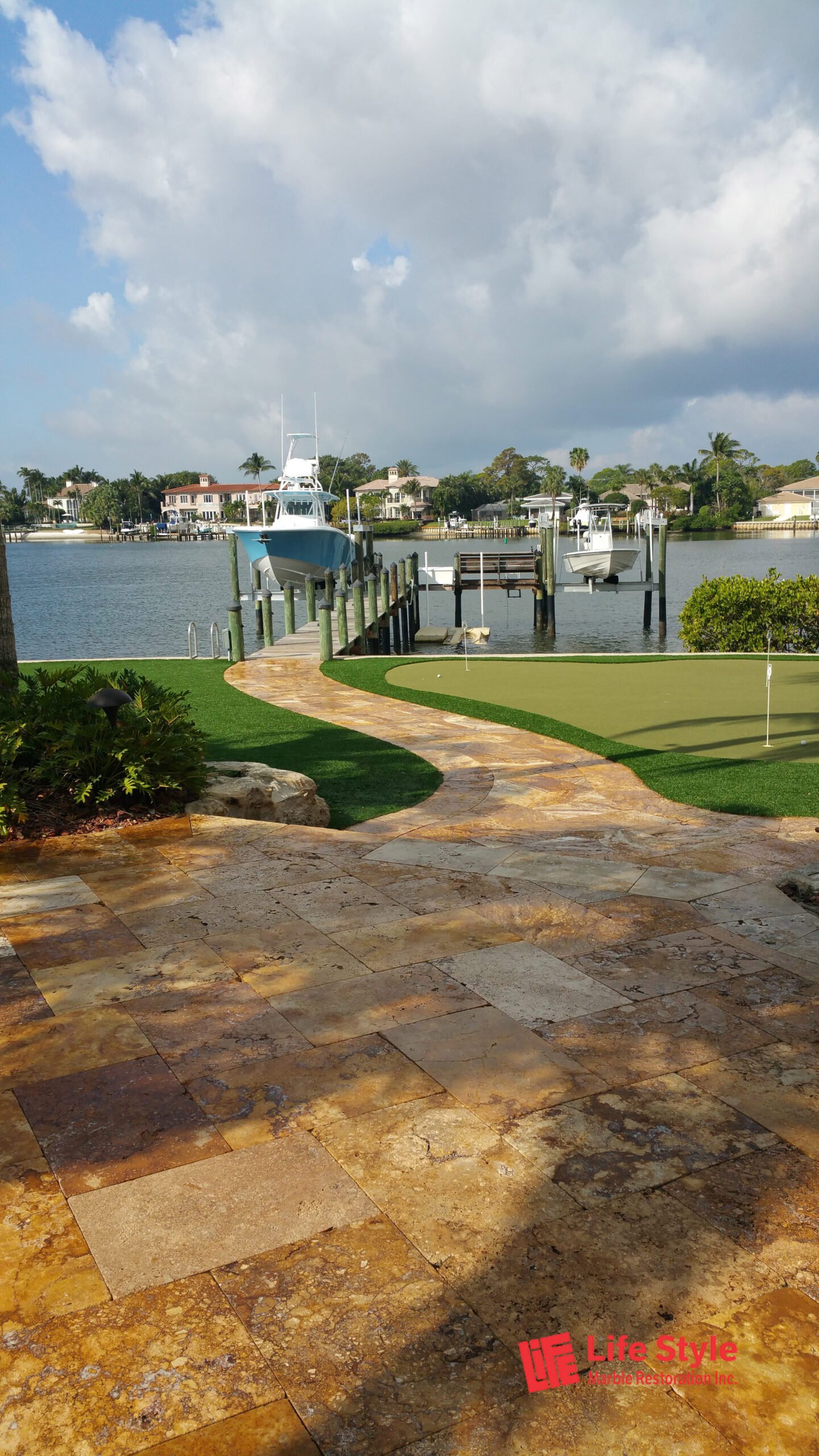
Outdoor stone restoration — full surface clean, algae removal, and UV-stable sealing. South Florida waterfront property.

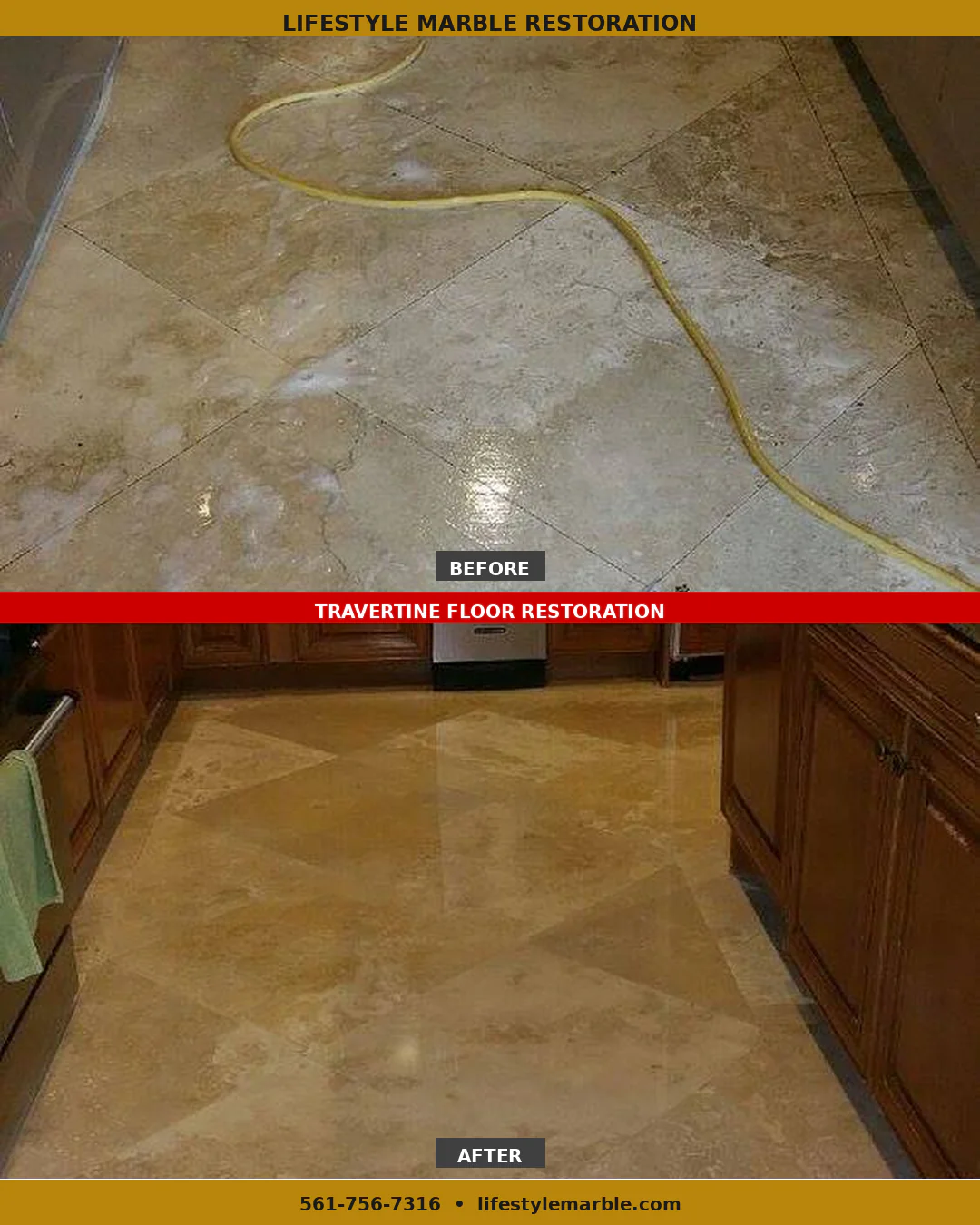
Travertine patio restoration — staining, oxidation, and biological growth removed. Palm Beach County estate.
Outdoor travertine cleaning and sealing — years of weathering reversed. Boca Raton home.
Outdoor Stone Restoration Across Palm Beach County
- West Palm Beach
- Palm Beach Island
- Boca Raton
- Delray Beach
- Boynton Beach
- Palm Beach Gardens
- Jupiter
- Lake Worth Beach
- Wellington
- Greenacres
- Royal Palm Beach
- Riviera Beach
Common Questions About Outdoor Stone Restoration
Outdoor stone is almost always honed or tumbled rather than polished — a high-gloss mirror finish on an outdoor driveway or patio would be extremely slippery when wet and impractical to maintain outdoors. Our outdoor restoration process focuses on thorough cleaning, stain removal, repair of damage, and professional sealing to revive the stone’s natural color and protect the surface. For exterior entry stairs and decorative architectural stone, a light hone or satin finish can sometimes be appropriate — we’ll advise based on what we see.
With professional-grade outdoor sealers applied correctly, South Florida outdoor stone typically needs resealing every 3–5 years. Consumer-grade sealers in our climate often fail in 12–18 months. The test is simple: pour a small amount of water on the stone. If it beads up and stays on the surface, the sealer is working. If it absorbs into the stone immediately, it’s time to reseal. We’re happy to do a sealer check at no charge when we’re in your area.
Yes — rust staining from iron in the stone, from fertilizer contact, or from metal furniture legs is one of the most common outdoor stone stain issues we address. We use professional-grade rust removers and poultice compounds formulated for natural stone that pull iron oxide deposits out of the stone’s pore structure without damaging the stone or bleaching surrounding areas. Results depend on how deep the staining has penetrated and how long it’s been there, but most rust stains are significantly reduced or eliminated.
Efflorescence is mineral-laden water that migrates up through the substrate and deposits minerals on the stone surface as it evaporates. It looks like white powder or hazy patches and is common in outdoor stone in Florida’s wet season. We remove efflorescence using specific alkaline cleaners that dissolve the mineral deposits without damaging the stone. Addressing the source of moisture intrusion is equally important — if the drainage or substrate condition is contributing to efflorescence, we’ll flag it so you can address it before it recurs.
For small items — chairs, planters, accent tables — yes, please clear those from the work area before our arrival. For large items like heavy planters, built-in furniture, or outdoor kitchens that can’t be moved, we work around them and address the areas we can access. We’ll discuss specifics with you on the estimate visit so there are no surprises on the day of service.