
Limestone Floor Polishing & Restoration
Limestone is one of the most beautiful — and most delicate — natural stones in South Florida homes. Our gentle diamond-honing process brings back its warm, luminous glow without over-polishing or damaging the surface.
Limestone Is Beautiful. It’s Also Sensitive.
Unlike harder stones such as granite, limestone reacts chemically to household acids — citrus, vinegar, wine, cleaning products — leaving etches that look like dull cloudy patches. Standard floor cleaning services often make things worse by using products that strip the surface or leave residue in the stone’s natural pores.
At Lifestyle Marble Restoration, we work exclusively with natural stone. We understand limestone’s calcium-based composition and use only pH-neutral cleaners combined with diamond-abrasive honing discs calibrated to its specific hardness. The result is a smooth, even finish that lets the stone’s natural warmth and fossil detail come through.
Whether your limestone floors are honed matte, semi-polished, or fully polished, we match the finish exactly — no guessing, no shine where there shouldn’t be any.
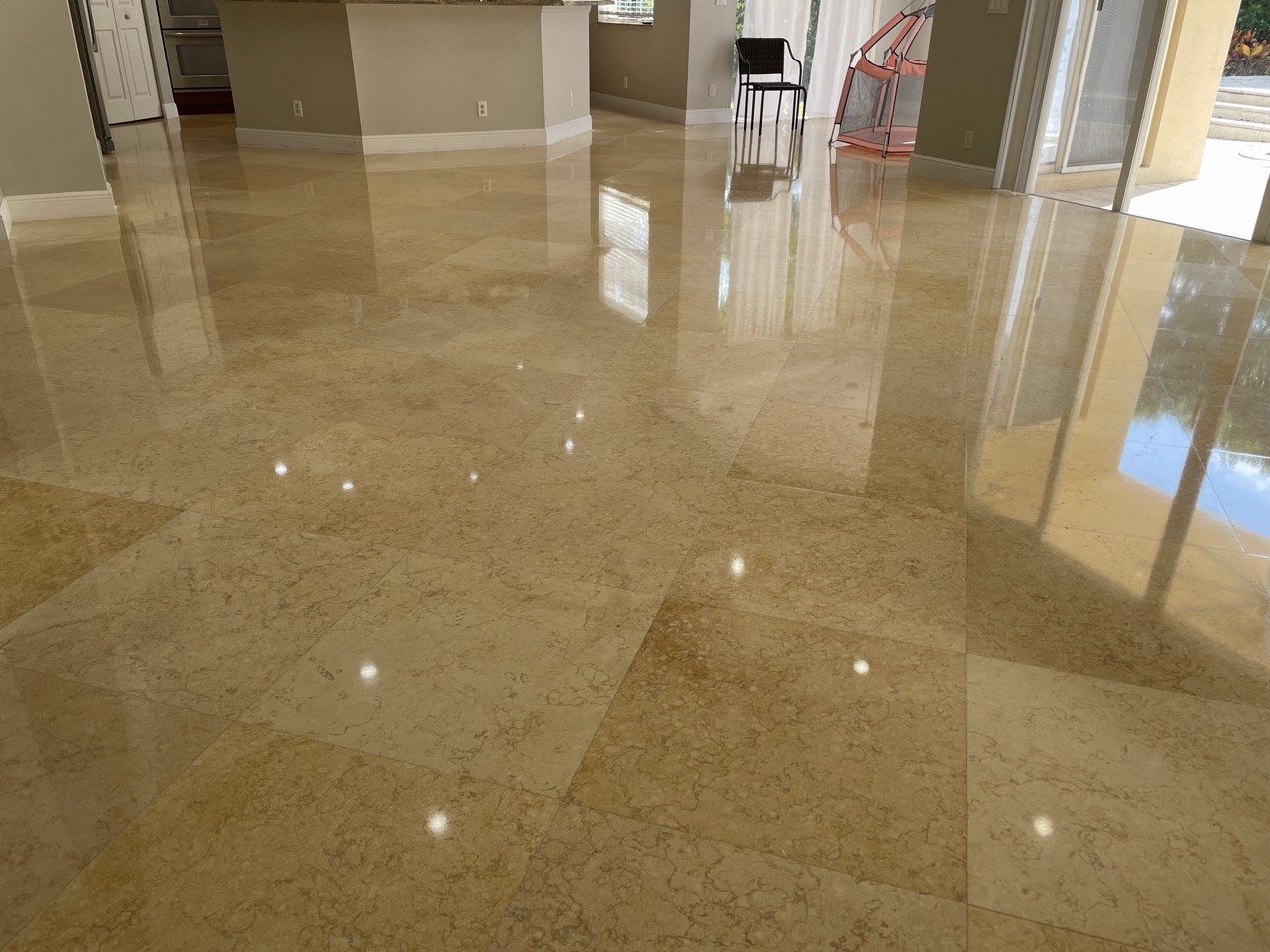
Everything Your Limestone Floors Need
From first-time restoration on neglected floors to routine maintenance polishing on well-kept stone, we handle every stage of the limestone life cycle.
Honing & Polish Matching
We restore your floor to its original finish level — whether that’s a soft matte hone, a satin, or a full polish — using diamond abrasives matched to the stone’s hardness.
Etch Mark Removal
Acid etches appear as dull patches on polished limestone. We grind down just enough to remove the damaged layer, then re-polish to blend seamlessly with the surrounding stone.
Deep Cleaning & Stain Removal
Organic stains, tannin from hard water, iron deposits — we use poultice and enzymatic treatments safe for limestone’s porous structure before any polishing begins.
Penetrating Sealer Application
We finish every limestone project with a premium penetrating sealer that protects against acid etching and moisture intrusion without altering the natural look or feel of the stone.
Lippage Correction
Uneven tiles and high edges create trip hazards and shadow lines that show every time the sun hits the floor. Our diamond grinding levels the surface and produces a flat, safe plane.
Maintenance Programs
For high-traffic limestone floors in homes and commercial spaces, we offer scheduled maintenance visits that keep the finish fresh and prevent deep damage from accumulating.
How We Restore Limestone Floors
Every project follows the same disciplined sequence to ensure lasting results — not just a surface-level shine that fades in weeks.
Assessment & Test Patch
We evaluate finish level, porosity, staining, and any existing damage. A small test area is done first on larger projects.
Deep Clean & Prep
pH-neutral stone cleaners remove surface dirt, old sealer residue, and contaminants before abrasive work begins.
Diamond Honing & Polish
Progressive diamond pads restore the surface. We finish at the exact grit level that matches your floor’s original finish.
Seal & Protect
A professional-grade penetrating sealer is applied and buffed in. Your floor is walkable again within hours.
Limestone in South Florida: What You’re Dealing With
Palm Beach County’s Mediterranean and Spanish Colonial architecture made limestone a go-to flooring choice for decades. But Florida’s humidity, hard water, and the constant traffic of sandy, salt-laden shoes are hard on a soft stone. Most limestone floors we see have some combination of etch marks from acidic cleaners, staining from hard water minerals, worn finish from foot traffic, and grout haze or sealer buildup that has dulled the surface. This is completely normal — and completely fixable. You don’t need to replace the stone. You need the right restoration process.
Limestone Restoration Results
Before-and-after results from Palm Beach County homes and commercial properties.

Limestone floor restoration — etch marks and traffic wear removed, surface honed and sealed. West Palm Beach estate.

Honed limestone brought back to its original soft matte finish — clean, even, and protected. Palm Beach County home.
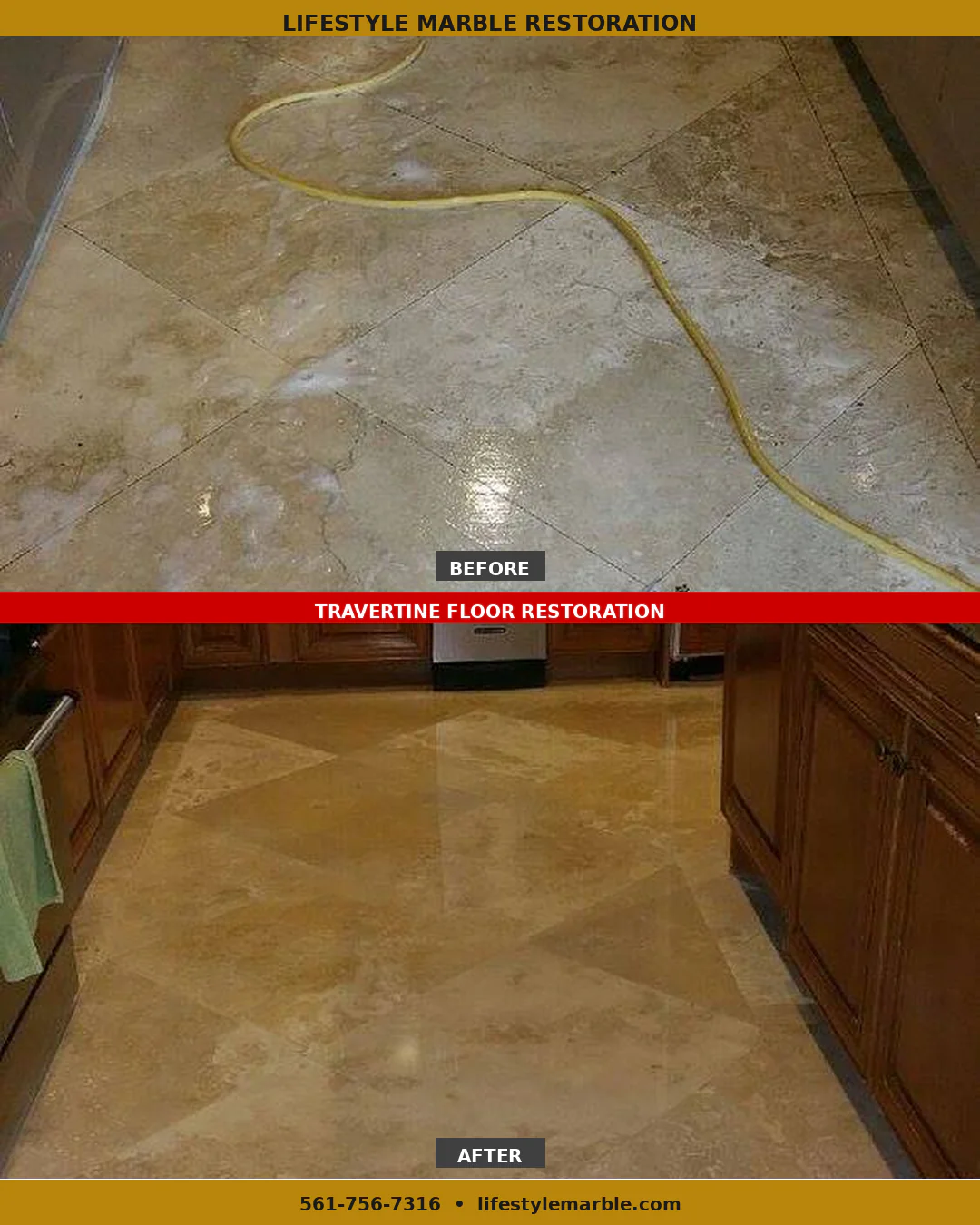
Kitchen limestone floor — grease staining and etch marks removed, honed and resealed. Boca Raton home.
Limestone Floor Polishing Across Palm Beach County
We serve residential and commercial clients throughout South Florida. No travel fees within our primary service area.
- West Palm Beach
- Boca Raton
- Delray Beach
- Boynton Beach
- Lake Worth Beach
- Wellington
- Palm Beach Gardens
- Jupiter
- Greenacres
- Riviera Beach
- Royal Palm Beach
- Palm Beach Island
Common Questions About Limestone Floor Restoration
Yes — in almost all cases. Etch marks are surface-level damage to the polished layer of the stone, not the stone itself. We use progressive diamond abrasives to grind away just the damaged layer, then re-hone and re-polish to blend the repaired area with the surrounding tiles. The result is invisible. Tile replacement is almost never necessary for etch damage alone.
Absolutely. Matching the existing finish level is one of the most important parts of our process. Before we start, we evaluate your floor’s sheen level and note the grit level it was originally finished at. We stop our diamond work at the same point, so the restored areas blend seamlessly. You won’t see shiny patches where you had matte, or dull patches where you had a slight sheen.
A typical residential limestone floor (400–800 sq ft) takes one full day. Larger or more damaged floors may require two visits. We leave the sealer to cure for a few hours before the floor is walkable, and we recommend keeping it dry for 24 hours. We’ll give you a specific timeline when we assess your floor on the free estimate visit.
We use professional-grade penetrating (impregnating) sealers that absorb into the stone’s pores rather than coating the surface. This protects against liquid intrusion and slows acid etching without changing the look or feel of the stone. We do not apply topical coatings or wax to limestone — those products trap dirt, peel over time, and make future restoration harder.
Use only pH-neutral stone cleaners — never vinegar, bleach, citrus-based cleaners, or anything labeled “multi-surface.” Sweep or vacuum regularly to prevent grit from scratching the surface. Place mats at entry points to reduce sand and salt tracked in from outside. Resealing every 2–3 years (or when water stops beading on the surface) keeps the protection current. We provide written care instructions after every project.