
Stone Repair in
Aventura —
Holes, Cracks & Chips
A cracked travertine tile. A chipped marble countertop edge. Voids opening back up in your condo floor. A hairline crack in your bathroom stone wall. These are repair jobs — not full restorations — and we handle them with the same color-matched precision and professional-grade materials as every project we take on.
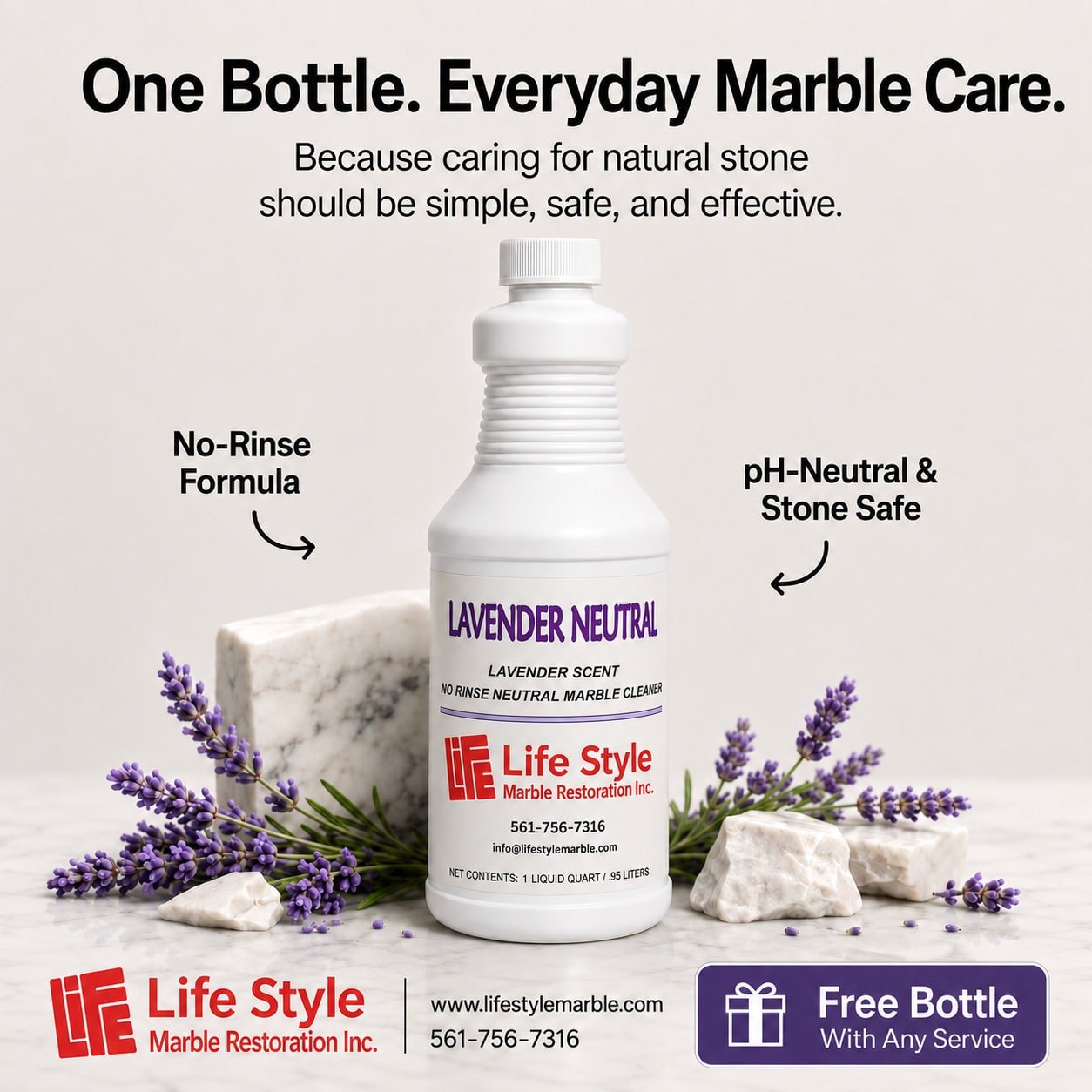
- ✓pH-neutral — safe for all repaired natural stone
- ✓Won’t re-stain fresh repair fills
- ✓No rinse required — streak-free
- ✓Trusted by Lifestyle Marble pros
⭐ Don’t Replace It — Repair It: Most cracked, chipped, and damaged natural stone in Aventura condos and estates can be repaired color-matched and seamlessly. Free on-site estimate.
Aventura’s Natural Stone
Gets Damaged.
We Fix It.
Aventura’s luxury condos and high-rise buildings put enormous demands on natural stone. Travertine floors in Williams Island and Porto Vita develop voids as factory-installed fillers loosen under foot traffic. Marble countertops in Turnberry Ocean Club kitchens chip at edges when heavy objects make contact. Building settlement creates hairline cracks in bathroom stone walls throughout the Bal Harbour and Sunny Isles corridor. Countertop seams at kitchen islands open slightly as buildings flex over time.
When this happens, the instinct is often to panic — or to assume the entire slab or floor needs to be replaced. In the vast majority of cases, neither is warranted. Professional stone repair using color-matched epoxy, polyester resin, and stone filler produces results that are genuinely invisible under normal viewing conditions. The repaired area blends seamlessly into the surrounding stone, and the fix is permanent.
Replacement, on the other hand, is expensive, disruptive, and often impossible — matching the exact lot and finish of a stone installed years ago is frequently not achievable. Repair is almost always the right answer, and we’ve been providing that answer to Aventura homeowners, condo managers, and HOAs for over 15 years.
Get a Free Repair EstimateColor-Matched Every Time
The right fill color is the difference between an invisible repair and an obvious one. We carry an extensive range of epoxy tints and stone fillers in warm ivory, cream, grey, walnut, black, gold, and white — and we test the match in a small area before proceeding across the floor or surface.
All Stone Types
Travertine (all four varieties), marble (all grades), granite, quartzite, limestone, onyx, and soapstone. Each material requires different filler chemistry, different surface preparation, and different finish work after the repair. We approach each correctly.
Repair + Restore in One Visit
Most stone repair jobs benefit from combining the repair with a localized polish and reseal of the repaired area — and often the surrounding surface as well. We can complete both in a single visit, leaving the repaired zone indistinguishable from the surrounding stone.
Every Type of
Stone Damage
From travertine void filling to marble chip repair to countertop seam correction — if the damage is in your natural stone, we can fix it. Here’s every repair type we handle throughout Aventura.
Travertine is formed by hot spring deposits and contains natural voids that were filled at the factory during production. Over time — especially in high-traffic condo floors — those fills loosen and fall out, leaving open holes that accumulate dirt and bacteria and create an uneven, unsightly surface. We fill all voids with color-matched material (warm ivory for Roman travertine, grey-toned for Silver, dark walnut for Noce, cream for Ivory) and diamond-hone the fill flush with the surrounding stone before resealing.
Cracks in natural stone have three primary causes in Aventura: building settlement (especially common in older high-rises along the Biscayne corridor), heavy impact, and installation error where thin-set voids beneath tiles allow slight movement to fracture the stone. We assess each crack for depth, width, and whether it indicates underlying structural movement before recommending a repair approach. Hairline surface cracks are filled and blended. Through-cracks that compromise tile integrity are filled with low-viscosity epoxy injected under pressure, allowed to cure fully, then trimmed and diamond-honed flush. Where underlying subfloor movement is the cause, we advise on the structural fix required before repair is applied.
Chips are the most common stone damage in Aventura’s kitchen and bathroom countertops. Despite granite’s hardness and marble’s visual strength, both chip readily when struck at the right angle by a heavy pan, a dropped appliance, or moving furniture. Counter edges and corners are the most vulnerable points. We repair chips using color-matched polyester or epoxy resin, applied in layers to allow for shrinkage during curing, then diamond-honed and polished to match the surrounding finish exactly. On dark stones like Absolute Black granite or Nero Marquina marble, where any imperfection is starkly visible against the uniform field, precision color matching is everything — and we do a visible test before committing to the full repair.
Quartzite and marble kitchen island countertops in Aventura’s luxury condos are often installed in multiple slabs joined by a seam — and over time, building flex, adhesive breakdown, and thermal expansion can cause that seam to open, chip at the edges, or fill with debris. An open seam on a Taj Mahal quartzite waterfall island is impossible to ignore. We clean out the seam, remove any degraded adhesive, re-bond the slabs using stone-grade epoxy matched to the stone’s color, and diamond-finish the seam zone to match the surrounding surface. Where the seam is at a waterfall edge, we restore both the horizontal top and the vertical face.
When you step on a tile and hear a hollow sound, or notice movement underfoot, the adhesive bond between the tile and substrate has failed — a common issue in Aventura condos where moisture infiltration beneath bathroom tiles and age-related adhesive breakdown occur regularly. A hollow or loose tile that is left unaddressed will eventually crack under foot traffic. We inject specialized stone adhesive beneath the tile through small drilled access points, allow the adhesive to cure under pressure, then fill and finish the access points to match the surrounding surface. This repair is virtually invisible and restores a permanent bond without the disruption of tile replacement.
The edges and corners of marble and limestone surfaces in Aventura take constant abuse — from luggage, furniture, foot traffic, and daily kitchen use. Eased edges on marble thresholds chip. Bullnose edges on bathroom shelves fracture. Corners on limestone floor tiles break off. We rebuild chipped and broken edges using stone-grade polyester resin in the matching color, layering and curing before diamond-honing and polishing the restored edge to match the finish of the surrounding surface. On carved or profiled edges — ogee, bevel, waterfall — we work the repair to match the original profile precisely.
Our Stone Repair
Process — Step by Step
Professional stone repair is not a tube of caulk and a weekend afternoon. Each step below matters — and skipping any one of them is why DIY stone repairs are almost always visible from across the room.
On-Site Assessment & Color Match Test
Before any material is mixed or applied, we assess the damage type, depth, and cause. We identify the stone variety — because the correct filler chemistry for travertine differs from marble, and marble from granite. We then select the appropriate fill material and test the color match in a small, inconspicuous area of the same stone before mixing the final batch. On dark or uniform stones like Absolute Black granite, Nero Marquina marble, or Silver travertine, we may test two or three formulations before settling on the right match. No repair proceeds until the color is confirmed.
Surface Preparation & Cleaning
The repair zone is cleaned thoroughly — residual dirt, grease, old filler debris, and any cleaning product residue must be completely removed before fresh filler is applied, because contamination prevents adhesion. We use solvent-based cleaners appropriate to the stone type, allow the area to dry completely, and in some cases use compressed air to clear microscopic debris from voids and crack channels. For crack repairs, we examine whether the crack continues to open slightly under load — an indicator of ongoing subfloor movement that would defeat any surface repair. If we find that, we advise on the structural fix required before proceeding.
Fill Application
Fill material is applied in layers — never in one thick application, because thick applications shrink significantly during curing and leave a depressed zone that shows as a dull shadow at the repair site. For void filling, we slightly overfill each layer, allowing shrinkage during cure before applying the next. For crack repairs, we use low-viscosity epoxy that flows into the crack under its own weight or with light pressure, penetrating the full depth of the fracture. For chips and edge repairs, we build up the material in multiple passes, slightly overfilling the final layer to allow for the material removed during the diamond-honing step that follows. Setting and cure time is respected fully — we never rush this step.
Diamond Honing to Flush
Once the fill is fully cured, we use fine diamond pads to hone the repaired area flush with the surrounding stone surface. This is the step that separates professional stone repair from amateur attempts. The goal is not just to remove the excess fill but to produce a surface that is exactly flush — with no depression (under-honed) and no raised spot (over-honed) that catches light at an angle. We work slowly, checking frequently with a straightedge and raking light, until the surface is uniform across the repair zone and the surrounding stone. On polished surfaces, we then progress through finer grits to match the sheen level of the surrounding stone exactly.
Polish & Finish Matching
The repair area is polished to match the finish of the surrounding stone — whether that’s a matte hone, a satin semi-polish, or a full mirror gloss. This is a judgment call that requires reading the existing stone finish accurately and knowing which polishing compound and buffing sequence produces that exact result on the specific material in question. On French limestone or Jerusalem stone, the target is the stone’s natural matte character — we stop the process at exactly the right moment. On Calacatta marble or Absolute Black granite, the target is a mirror finish indistinguishable from the surrounding surface. We do a final visual check under raking light before finishing.
Localized Reseal
Every completed stone repair ends with application of penetrating sealer to the repaired zone and — depending on the size and location of the repair — a broader area of surrounding stone. Fresh fill material is porous until sealed and should not be left exposed to staining agents. We use penetrating sealers appropriate to the stone type: matte-finish formulas for limestone, non-yellowing formulas for white stones, UV-stable formulas for outdoor areas. The seal protects the repair and integrates it with the sealed surrounding surface so there is no visible difference in surface character between the repaired zone and the rest of the floor or countertop.
What Changes by
Stone Type
Same repair types, different materials. The filler chemistry, diamond grit selection, and finish approach differ significantly by stone — here’s what that means for each material installed in Aventura’s luxury properties.
Travertine Repair
Travertine is the most frequently repaired stone in Aventura. Its natural void structure means hole filling is part of every travertine floor’s lifecycle — not an unusual event. We carry color-matched fill in warm ivory (Roman), grey-toned (Silver), walnut (Noce), and cream (Ivory). The wrong fill color is permanently visible, so we test before committing.
- Void and hole filling with color-matched grout or epoxy
- Crack repair using low-viscosity epoxy injection
- Chip repair at tile edges and corners
- Loose tile re-bonding without tile removal
- Pool deck travertine crack and coping repair
Marble Repair
Marble chips and cracks are common in Aventura’s high-use kitchen and bathroom surfaces. The key challenge is matching the translucent depth of marble fill — a flat opaque filler looks obviously patched. We use polyester resins with translucency appropriate to the marble variety. On dramatic veined marbles like Calacatta or Statuario, we can hand-draw veining detail into the repair material before it cures.
- Chip repair at countertop edges and corners
- Crack filling with color-matched translucent resin
- Vein recreation on dramatic marble varieties
- Edge and bullnose profile restoration
- Countertop seam repair and re-bonding
Granite Repair
Granite is the hardest of the common luxury stones and the most impact-resistant — but it does chip, especially at edges and corners, and even a minor chip on Absolute Black granite is catastrophically visible against the uniform dark surface. Granite repair requires epoxy with UV-stable pigments that maintain color under intense light without fading or yellowing over time. We match the mineral sparkle pattern, not just the base color.
- Chip repair at countertop edges with mineral-matched epoxy
- Crack repair using UV-stable epoxy injection
- Seam repair and re-bonding on kitchen islands
- Surface pit and inclusion repair on affected areas
Limestone & Quartzite Repair
Limestone repair requires the most delicate approach — particularly on Jura limestone where fossil inclusions must be preserved, and on French limestone where any over-aggressive honing after fill application permanently alters the stone’s matte character. Quartzite repair is challenging for different reasons: the material’s hardness means fill materials of matching durability must be selected, and warm-toned quartzites like Taj Mahal require fillers that enhance rather than cool the gold vein tones.
- Jerusalem stone etch and chip repair preserving warm tone
- French limestone fill at matte finish — no over-polish
- Jura limestone repair with fossil detail preservation
- Taj Mahal quartzite seam and chip repair, warm-tone matched
- Super White quartzite countertop seam correction
Repair & Restoration
Before & After
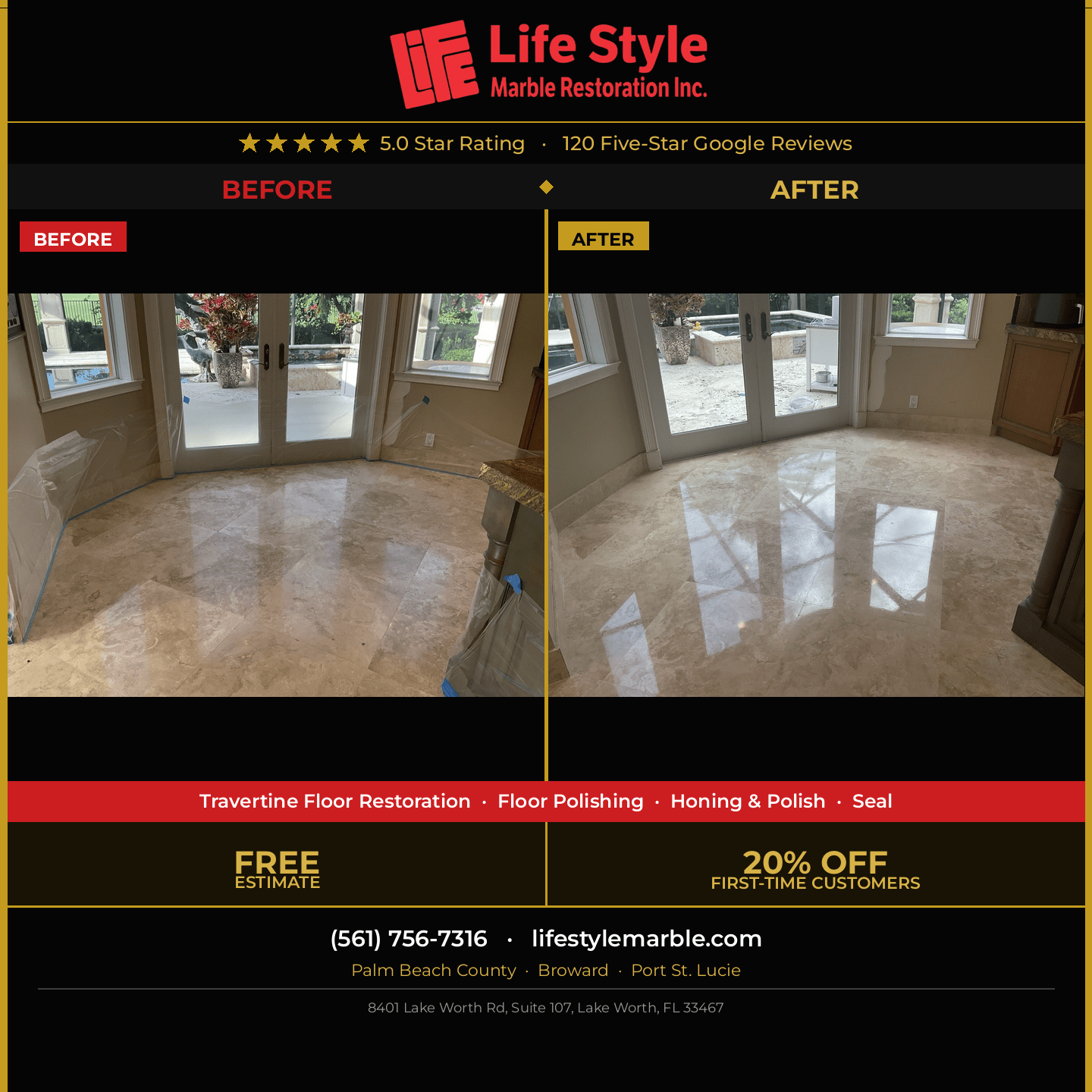
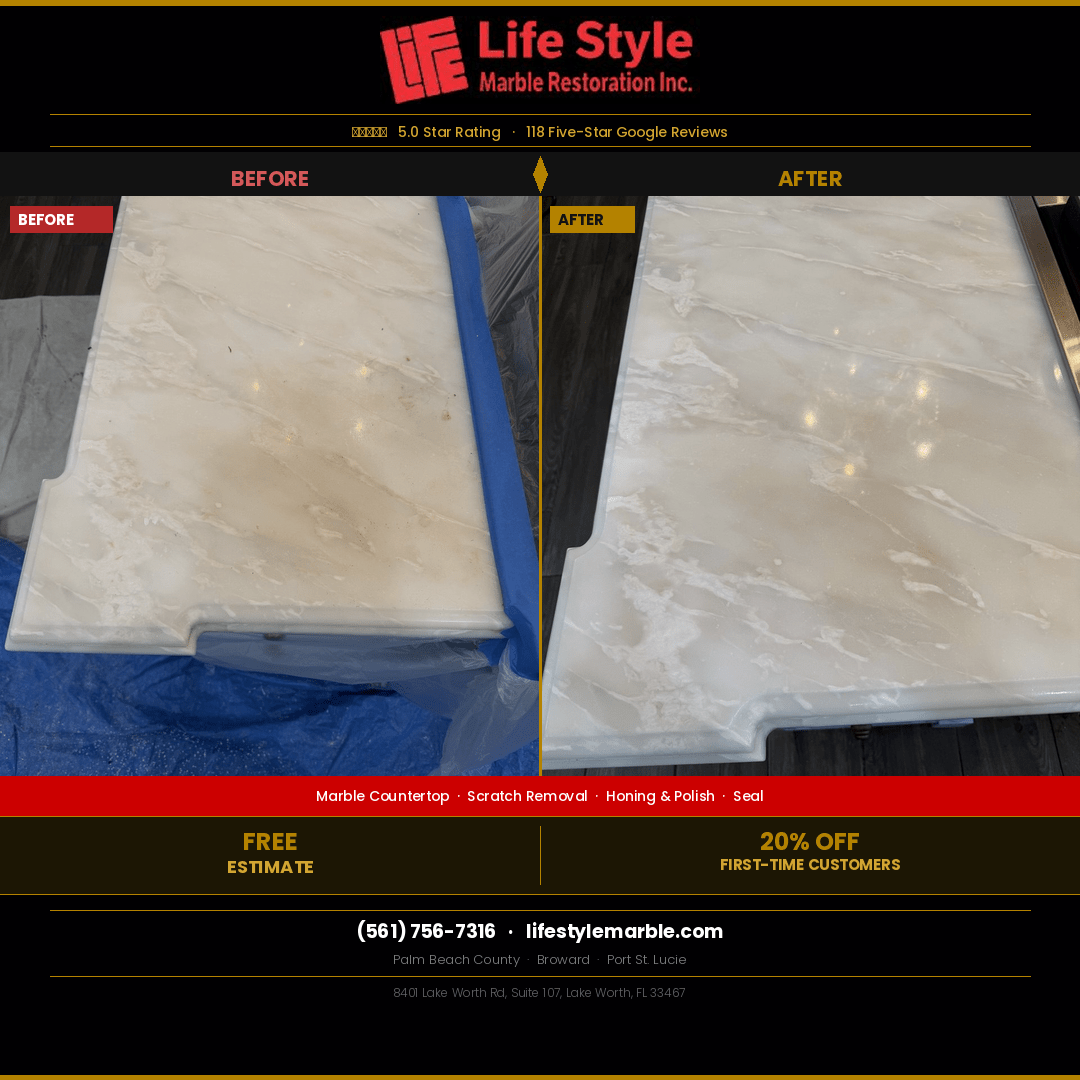
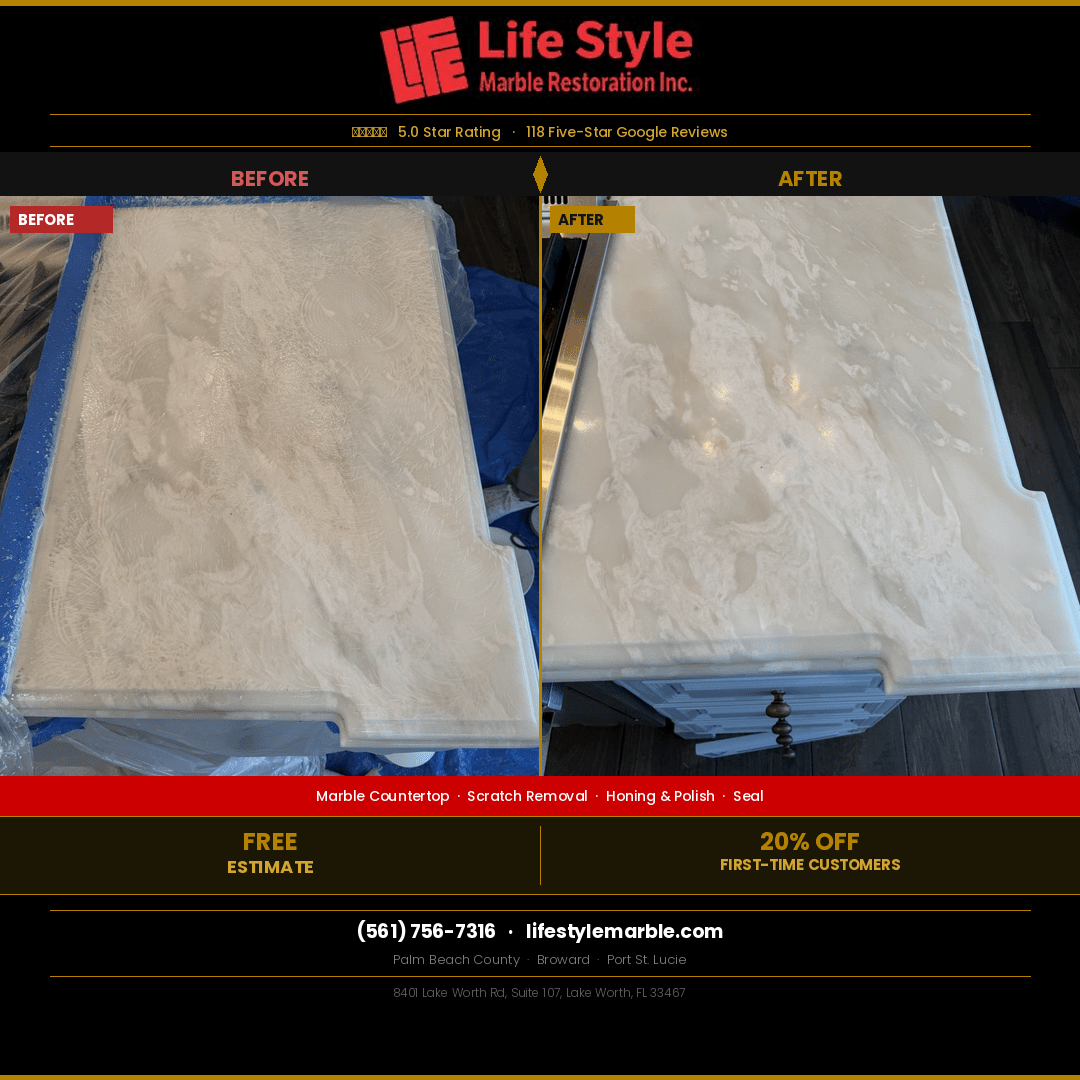
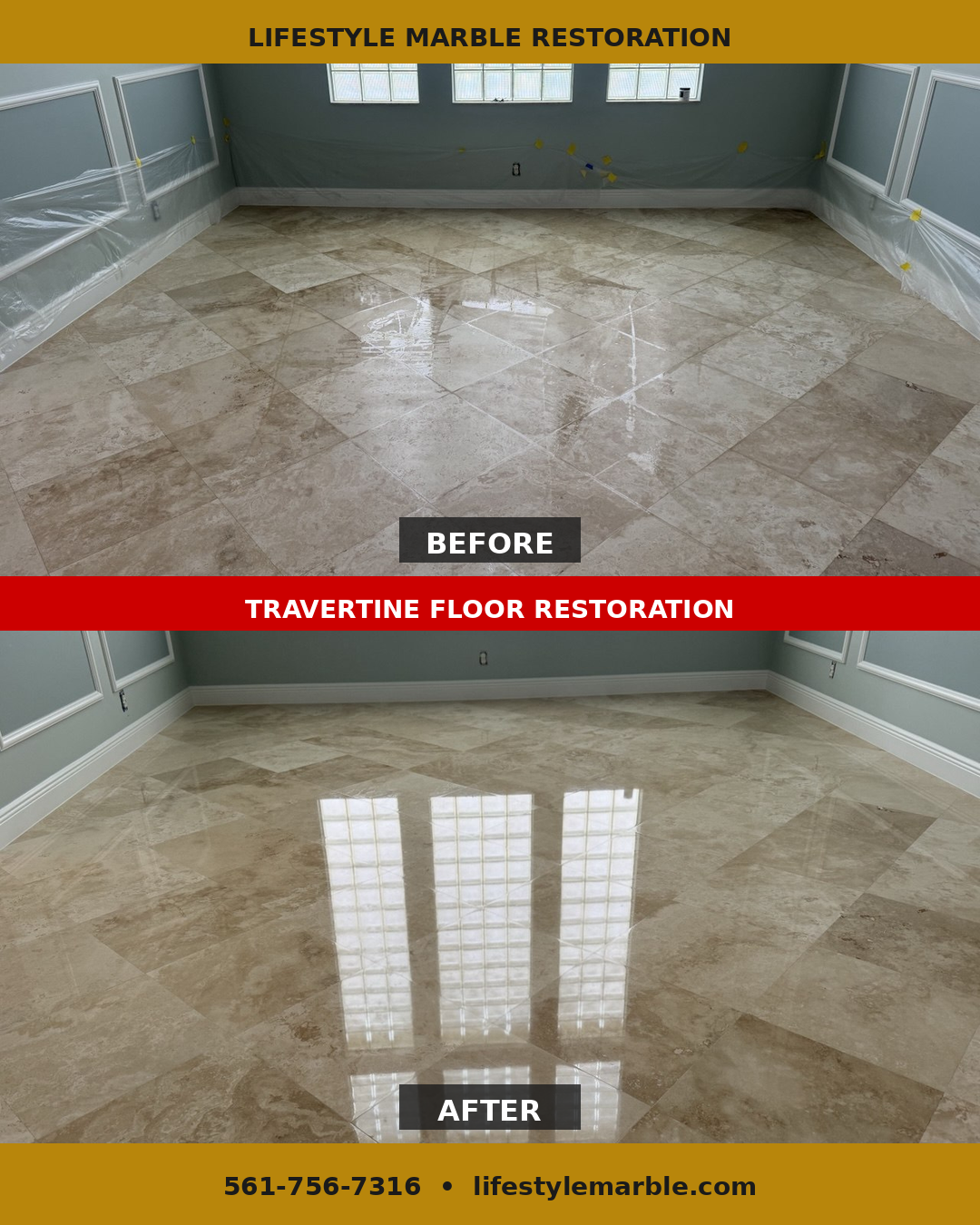
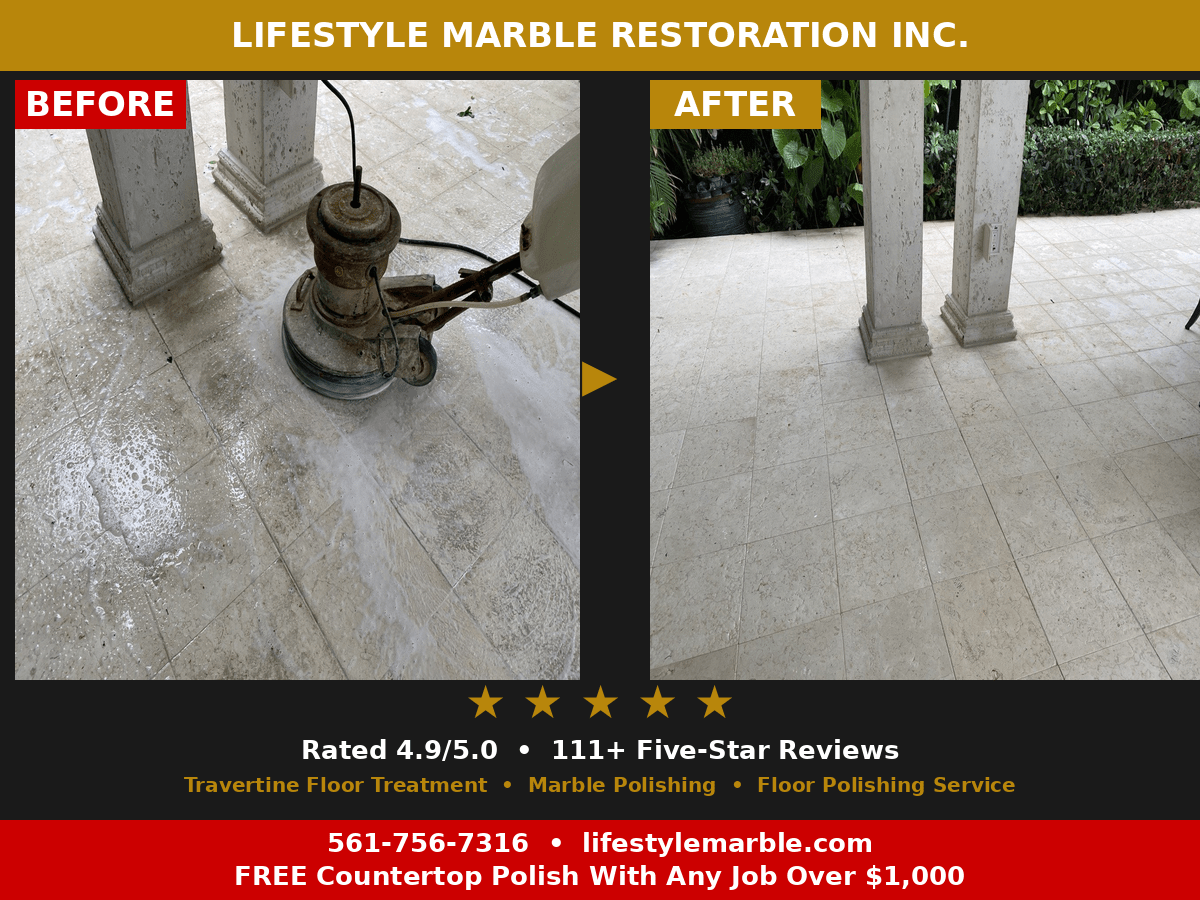
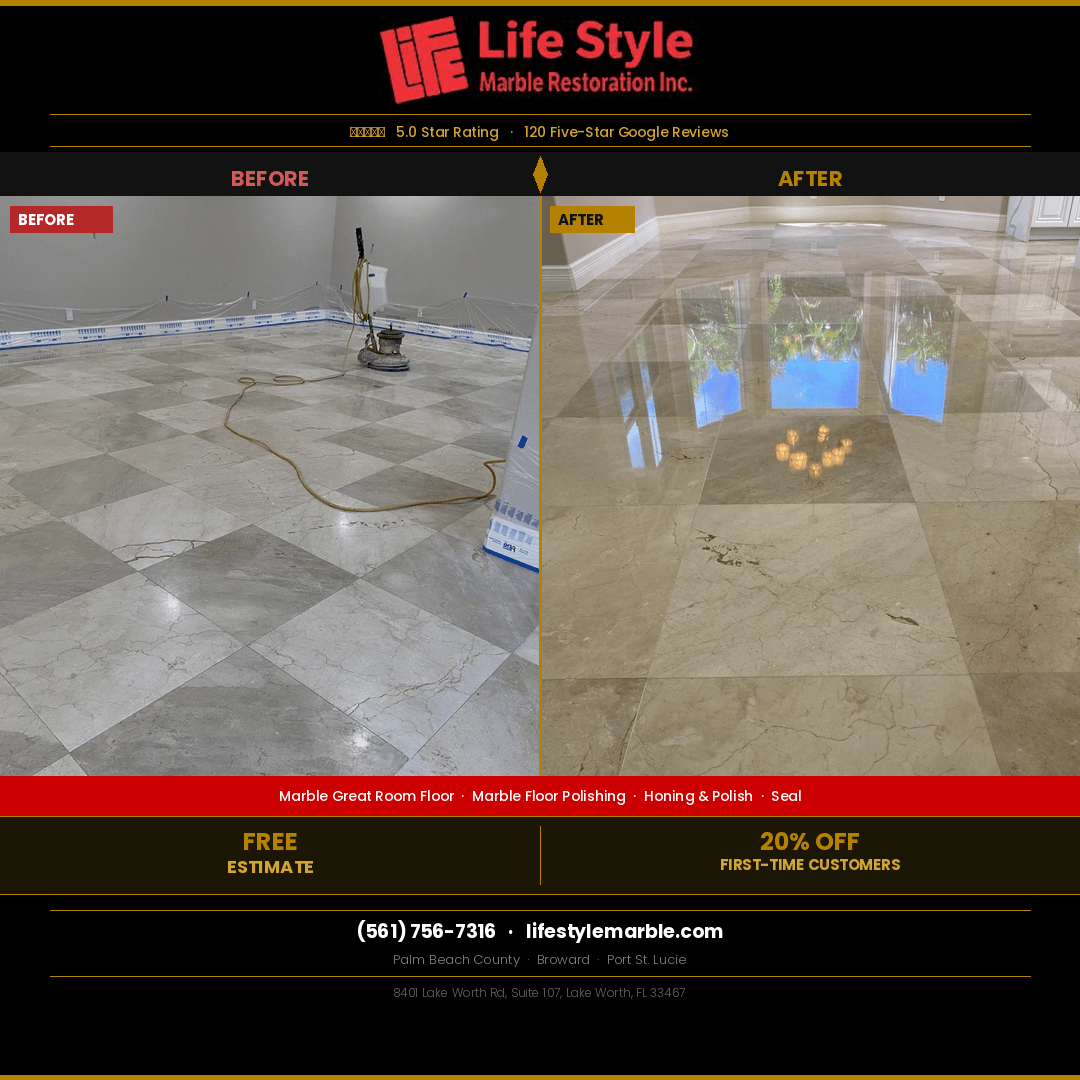
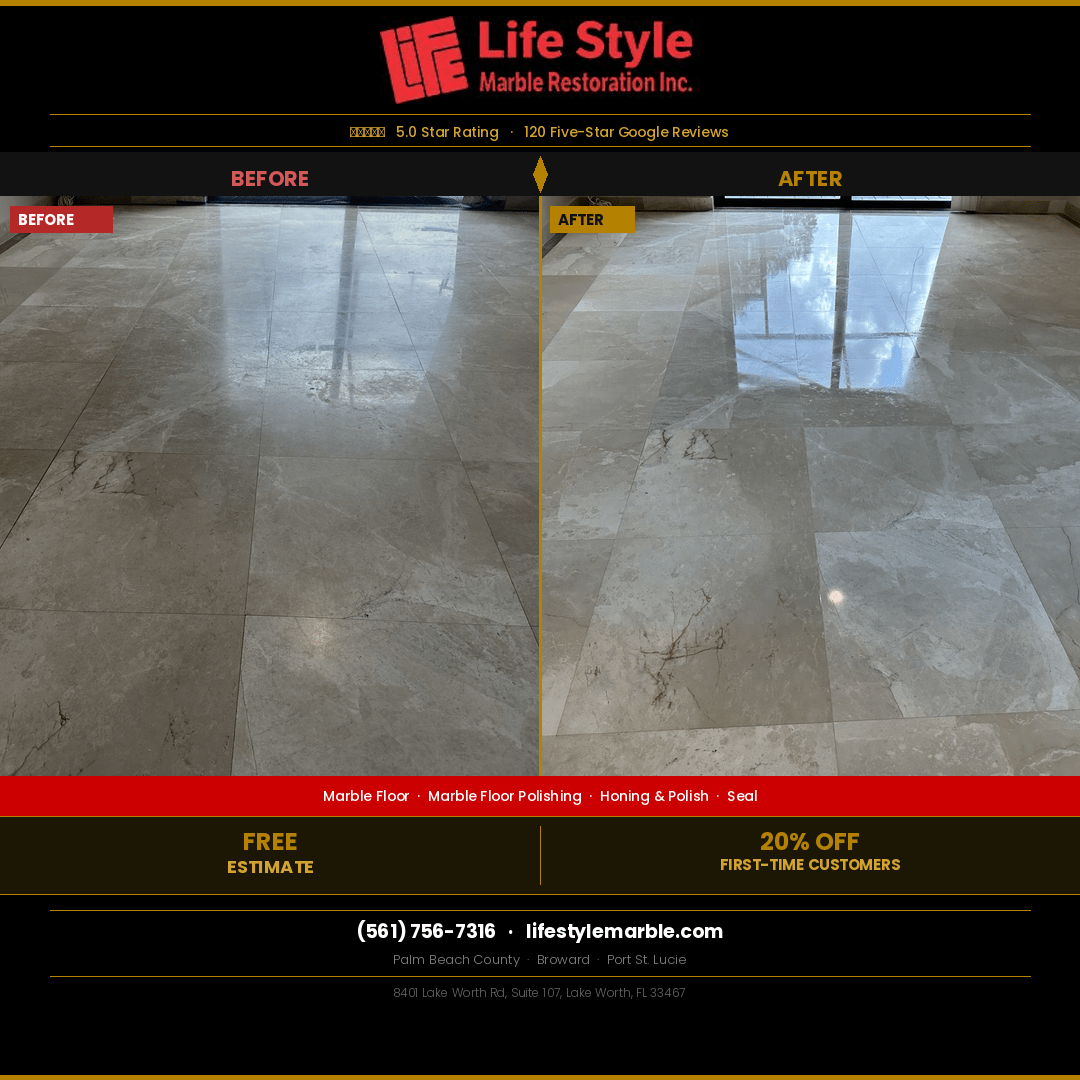
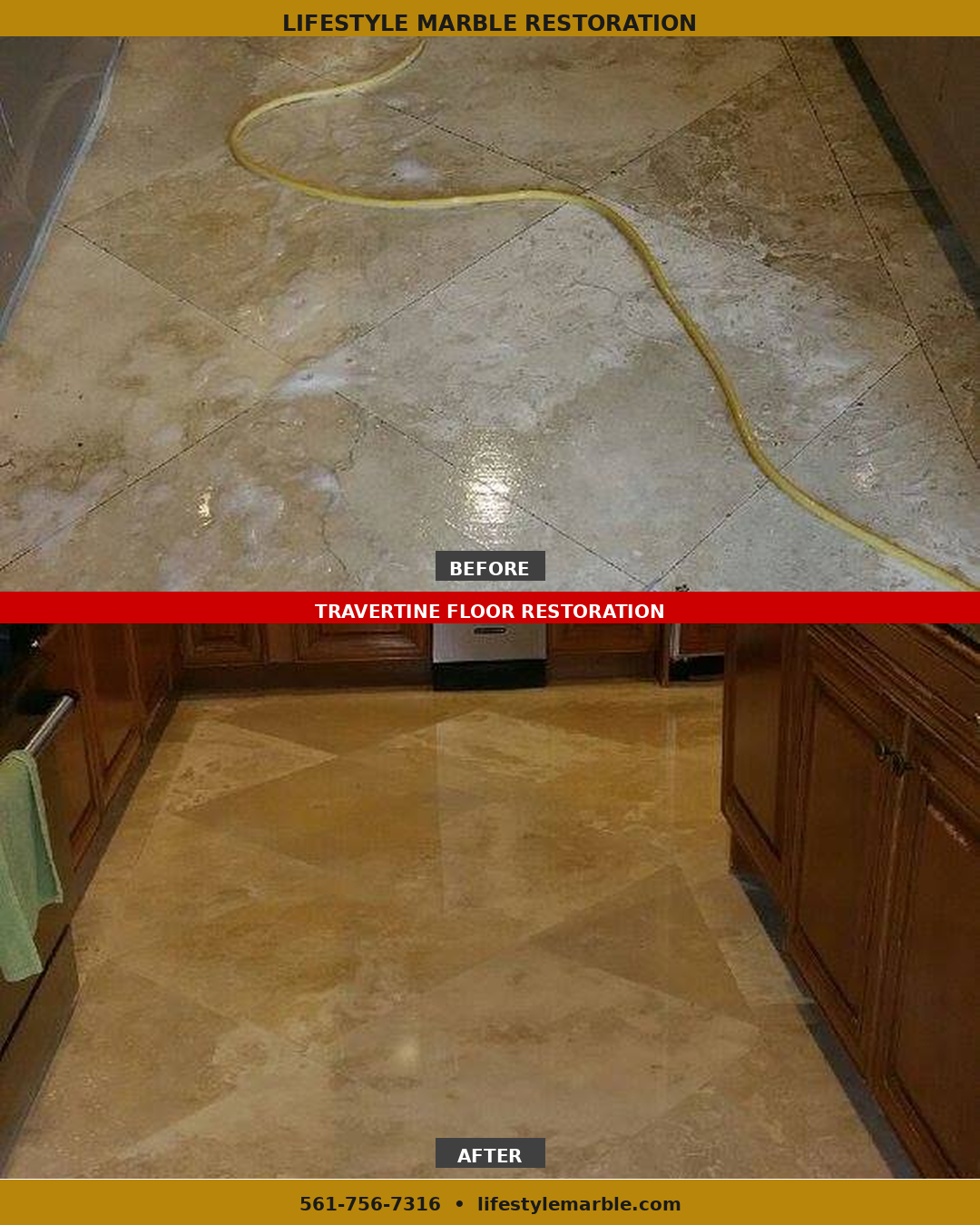
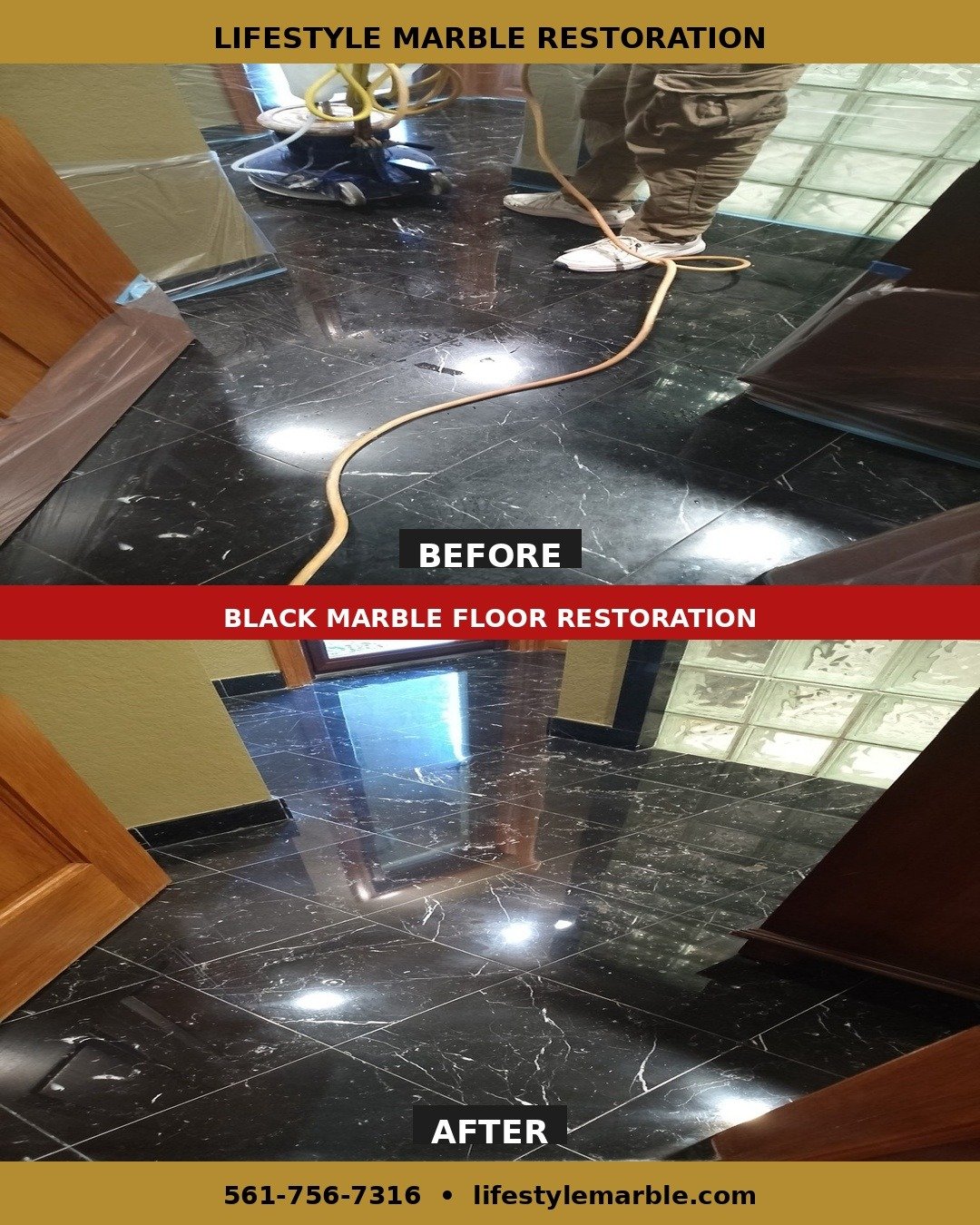
Cracked tiles, open voids, chipped countertops, and damaged stone surfaces repaired and restored throughout South Florida’s luxury properties — seamless results in a single visit.






The Stone Repair Standard
for South Florida
Color Matching Is Everything
A stone repair is only as good as its color match. We carry an extensive range of fill materials and test the match on-site before committing to the repair — never approximating and hoping it’s close enough.
We Know the Root Cause
If your travertine voids keep reopening, or a crack keeps reappearing, there’s an underlying reason. We identify it before repairing, so you’re not paying for the same repair twice.
Repair + Restore in One Visit
We don’t repair in isolation. If the surrounding stone shows surface wear or dulling, we can combine the repair with localized honing and resealing — so the repaired area doesn’t stand out as newer-looking than the rest of the floor.
Condo-Ready & HOA-Friendly
Stone repair in Aventura condo buildings requires elevator protection, access coordination, and noise-sensitive scheduling. We handle all of it — and we can work directly with your property management team.
“Jean Martial and team did incredible work. Kind, honest, and very attentive to detail. Amazing results for a very fair price. Highly recommend.”
“I had a badly cracked travertine floor and was told by another company I needed to replace the whole thing. Lifestyle Marble repaired it completely — you can’t find the repair at all. Unbelievable.”
“Chip in my marble countertop looked terrible. One visit, perfectly matched. I would never have known it was repaired if I hadn’t watched them do it.”
Questions Aventura Clients
Ask Before Booking
Can a cracked natural stone tile actually be repaired invisibly?
In most cases, yes — with the right filler, correct color match, and proper diamond finishing, a crack repair is genuinely invisible under normal viewing conditions. The exceptions are cracks on very dark, uniform stones like Absolute Black granite or Nero Marquina marble, where even a slight color variance is visible against the field. On those stones we do a visible test on a sample area before committing to the repair, and we’ll tell you honestly if the result meets your standard before we finish. We never oversell repair capability — if a result won’t satisfy you, we’d rather tell you upfront than leave you disappointed.
My travertine floor voids keep coming back — why?
The most common reasons in Aventura are: the original fill material used at installation was grout (which is less durable than epoxy and degrades faster under traffic), there is moisture infiltration beneath the floor that is softening the adhesive bond, or the floor was installed without proper void preparation. When we re-fill travertine voids, we use professional-grade epoxy fill that is significantly more durable than grout and bonds properly to the stone’s calcium surface. If moisture is the underlying cause, we’ll identify that during our on-site assessment and advise on addressing the source before refilling.
My marble countertop has a chip at the edge — is that a repair or a replacement?
Almost certainly a repair — edge chip repair is one of the most common and most successful stone repair types we perform. We rebuild the missing material using color-matched polyester resin, diamond-hone it flush with the profile of the existing edge, and polish to match the surrounding finish. On most marble countertops, including Calacatta, Carrara, and Emperador, the repair is completely seamless. The only situation where we’d recommend against repair is a very large chip that has also fractured the stone internally — but even then, repair is usually preferable to replacement, which requires matching the exact lot and finish of the existing slab.
A tile in my bathroom floor sounds hollow when I step on it — is that dangerous?
Not immediately — but it will become a problem. A hollow tile is one where the adhesive bond between the tile and subfloor has failed. Left in place, the tile will eventually crack under concentrated foot traffic, especially in a wet bathroom environment. We can re-bond the tile through small access points drilled through the grout joint — injecting stone-grade adhesive beneath the tile without removing it. The access points are filled and finished after curing. This repair is far less disruptive than tile removal and replacement, and it permanently restores the bond.
There’s a hairline crack in my marble shower wall — do I need to worry?
It depends on whether the crack is moving. A static hairline crack in a shower wall — one that appeared and hasn’t changed in width or length — is usually a surface crack from installation stress that can be filled and sealed. A crack that is widening or has water seeping behind it indicates a structural or waterproofing issue that needs to be addressed before any surface repair is applied. We assess the crack during your free estimate and tell you which situation you’re dealing with. If there’s a waterproofing issue, we’ll tell you that clearly so you can address it with your contractor before we do the stone repair.
How long does stone repair take and when can I use the surface afterward?
Most individual repair jobs — a single chip, a void filling session, a seam repair — take 2–4 hours on-site. A full travertine floor void-filling session across a typical Aventura condo living area (400–800 sq ft) takes a full day. Epoxy fill materials are cured and ready for light foot traffic in 4–6 hours, and fully hardened within 24 hours. We advise against placing heavy objects on repaired countertop areas for 24 hours. We’ll give you specific return-to-use instructions based on the material and repair type when we finish.
Don’t Replace It —
Let Us Repair It.
Get a free on-site stone repair assessment for your Aventura condo, penthouse, bathroom, kitchen, or lobby. We’ll tell you exactly what can be repaired, what it will look like, and what it will cost — before any work begins. Davinchi responds fast and arrives prepared.
(561) 756-7316