
Author: Christopher Davin Chi, Jr

  • Stone Restoration vs Cleaning | What’s the Difference?

    Stone Restoration vs Cleaning | What’s the Difference?

    Is Stone Restoration Different From Cleaning? | Lifestyle Marble
    ★★★★★ 4.9 Google Rating
    117+ Five-Star Reviews
    Stone Restoration
    Professional Cleaning
    Honing & Polishing
    Free Estimates Available
    ★★★★★ 4.9 Google Rating
    117+ Five-Star Reviews
    Stone Restoration
    Professional Cleaning
    Honing & Polishing
    Free Estimates Available
    Stone Care Blog

    Is Stone Restoration Different From Cleaning?

    Stone cleaning and stone restoration are not the same thing. Learn the difference between surface cleaning, deep cleaning, honing, polishing, repair, and sealing so you know what your stone actually needs.

    Stone Restoration vs Cleaning: What Is the Difference?

    When people search for stone restoration vs cleaning, they usually want to know one thing: does their floor, countertop, shower, or patio only need to be cleaned, or does it need a full restoration?

    The simple answer is this: cleaning removes dirt from the surface, while stone restoration corrects damage in the stone itself. Cleaning can make stone look fresher, but restoration can remove dullness, scratches, etching, stains, uneven wear, and lost shine.

    Both services are important, but they solve different problems. If your marble, travertine, terrazzo, limestone, or granite is simply dirty, professional cleaning may be enough. If the stone is scratched, etched, cloudy, stained, rough, or no longer shines, restoration is usually the better solution.

    Cleaning maintains the surface. Restoration renews the stone. That is the biggest difference between stone cleaning and stone restoration.

    What Is Stone Cleaning?

    Stone cleaning is the process of removing dirt, grime, residue, oils, soap scum, mildew, and buildup from the surface of natural stone. This can include mopping, scrubbing, pressure washing, professional tile and grout cleaning, or using a stone-safe cleaning solution.

    Cleaning is ideal when the stone is structurally in good shape but looks dirty or has buildup on top of the surface. For example, a travertine patio may have outdoor grime, a stone shower may have soap scum, or a marble floor may have residue from the wrong cleaner.

    Professional stone cleaning is different from regular household cleaning because it uses stone-safe products and proper equipment. Many common cleaners are too harsh for natural stone and can cause etching, dullness, or residue.

    What Is Stone Restoration?

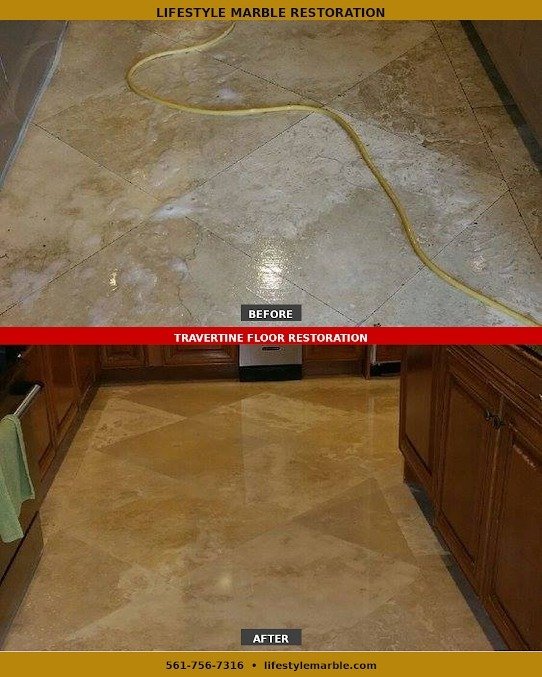
    Stone restoration goes beyond cleaning. It is the professional process of improving the actual condition of the stone. This can include deep cleaning, diamond honing, polishing, grinding, stain treatment, chip repair, crack repair, travertine filling, and sealing.

    If the stone has lost its shine, feels rough, has visible scratches, has etch marks, or looks cloudy even after cleaning, the issue is usually not just dirt. The surface may be physically worn or chemically damaged. In that case, the stone needs restoration.

    If the stone still looks dull after cleaning, the problem is probably not dirt. It is surface damage.

    Stone Restoration vs Cleaning Comparison

    Service What It Does Best For
    Stone Cleaning Removes surface dirt, oils, grime, soap scum, and residue. Stone that is dirty but not scratched, etched, or worn down.
    Stone Restoration Corrects damage using honing, polishing, repair, sealing, and deeper treatment. Stone that is dull, scratched, stained, etched, cloudy, or worn.
    Maintenance Cleaning Helps keep restored stone clean with stone-safe products. Weekly or monthly care after a professional restoration.
    Sealing Adds protection against stains, moisture, and everyday wear. Marble, travertine, terrazzo, limestone, granite, showers, and patios.

    When Cleaning Is Enough

    Cleaning may be enough if your stone still has a good finish but has dirt, dust, residue, or light buildup on top. This is common with floors that have not been cleaned professionally in a while or showers that have soap scum and mineral deposits.

    • The stone still has shine when it is clean.
    • The surface feels smooth and even.
    • There are no deep scratches or heavy etch marks.
    • The issue is mostly dirt, grime, residue, or soap scum.
    • The stone has not absorbed major stains.

    In these cases, professional cleaning can make a major difference. It can remove buildup, brighten the surface, and make the stone easier to maintain.

    When Stone Restoration Is Needed

    Stone restoration is needed when cleaning alone cannot fix the problem. If the stone is damaged, dull, etched, scratched, stained, or uneven, then the surface likely needs honing, polishing, repair, or sealing.

    • Your marble looks dull even after cleaning.
    • The floor has scratches, cloudy spots, or etching.
    • The stone feels rough instead of smooth.
    • Your travertine has holes opening up.
    • Your terrazzo looks faded or worn down.
    • Your stone shower has hard water damage or etched areas.
    • The surface no longer reflects light like it used to.

    Restoration is the better option when the stone needs more than surface cleaning. It brings back the finish, improves the look, and helps protect the stone from future damage.

    Why Regular Cleaning Cannot Remove Etching

    One of the biggest misunderstandings about stone care is etching. Many homeowners think an etch mark is a stain, but etching is actually surface damage. It often happens when acidic substances touch marble, limestone, travertine, or other calcium-based stones.

    Vinegar, lemon juice, wine, certain bathroom cleaners, and even some household products can cause dull spots. Cleaning will not remove those marks because the stone surface has been chemically changed. To fix etching, the surface usually needs honing and polishing.

    Why Polishing Is Not the Same as Cleaning

    Polishing is part of restoration. It is the process of refining the surface of the stone to bring back a reflective or smooth finish. Cleaning removes what is sitting on the stone. Polishing improves the condition of the stone itself.

    If a marble floor has lost its shine, a mop cannot bring that shine back. It may need professional honing and polishing to remove surface wear and rebuild the finish.

    How Sealing Fits Into Stone Restoration

    Sealing is another major difference between simple cleaning and full stone restoration. After stone is cleaned, honed, polished, or repaired, a professional sealer can help protect the surface from moisture, stains, and everyday wear.

    Sealing does not make stone completely stain-proof, but it gives the surface more protection and makes maintenance easier. This is especially important for travertine patios, marble floors, stone showers, kitchen countertops, and high-traffic areas.

    What Happens If You Only Clean Stone That Needs Restoration?

    If stone needs restoration but only gets cleaned, the surface may still look dull or damaged afterward. That is because cleaning does not remove scratches, etching, deep stains, or worn finish layers.

    This is why many homeowners feel frustrated after cleaning their marble or travertine. The floor may be clean, but it still does not look restored. In those cases, the problem is not the cleaning product. The stone needs a deeper restoration process.

    Which Service Do You Need?

    A simple way to decide is to look at the surface after it has been cleaned. If it looks good when clean, you may only need professional cleaning and sealing. If it still looks dull, scratched, cloudy, or worn, you probably need stone restoration.

    The best option is to have a professional inspect the stone. A trained restoration specialist can tell whether the surface needs cleaning, honing, polishing, repair, sealing, or a combination of services.

    Final Thoughts

    Stone cleaning and stone restoration are connected, but they are not the same. Cleaning removes dirt and buildup. Restoration renews the stone by correcting wear, dullness, scratches, etching, stains, and damage.

    If your stone is only dirty, cleaning may be enough. If your stone looks worn even after cleaning, restoration is usually the right solution. Understanding the difference between stone restoration vs cleaning helps you protect your natural stone and avoid wasting money on the wrong service.

    Need Help Deciding Between Cleaning and Restoration?

    Lifestyle Marble Restoration provides professional stone cleaning, marble polishing, travertine restoration, terrazzo care, tile and grout cleaning, sealing, and full stone restoration services throughout Palm Beach County and South Florida.

  • What Is Stone Restoration and Why Does It Matter?

    What Is Stone Restoration and Why Does It Matter?

    What Is Stone Restoration and Why Does It Matter? | Lifestyle Marble
    ★★★★★ 4.9 Google Rating
    117+ Five-Star Reviews
    Marble Restoration
    Travertine Restoration
    Terrazzo Polishing
    Free Estimates Available
    ★★★★★ 4.9 Google Rating
    117+ Five-Star Reviews
    Marble Restoration
    Travertine Restoration
    Terrazzo Polishing
    Free Estimates Available
    Stone Care Blog

    What Is Stone Restoration and Why Does It Matter?

    Learn what stone restoration means, why natural stone surfaces lose their beauty over time, and how professional cleaning, honing, polishing, repair, and sealing protect your investment.

    What Is Stone Restoration?

    Stone restoration is the professional process of cleaning, repairing, honing, polishing, and sealing natural stone surfaces to bring them back to a cleaner, smoother, and more beautiful condition. Instead of replacing expensive stone, restoration helps revive the surface that is already there.

    Natural stone has a way of making a home or business feel more elegant. Marble floors, travertine patios, terrazzo surfaces, granite countertops, and stone showers all bring a high-end look that regular flooring cannot match. But over time, even beautiful stone can become dull, scratched, stained, etched, or worn down.

    That is where stone restoration matters. It protects the surface, improves the appearance, extends the life of the material, and helps preserve the value of the property.

    Cleaning maintains the stone. Stone restoration renews it. Restoration goes deeper than regular mopping or surface cleaning by correcting scratches, dullness, etching, stains, and worn finishes.

    What Does Stone Restoration Include?

    Every stone surface is different, but most professional stone restoration projects include a combination of cleaning, honing, polishing, repair, and sealing. The exact process depends on the type of stone, the condition of the surface, and the finish the customer wants.

    • Deep cleaning to remove dirt, residue, oils, and grime.
    • Stain removal for discoloration, water marks, rust, or organic stains.
    • Diamond grinding or honing to remove scratches, etching, and uneven wear.
    • Polishing to restore shine and bring back a clean reflective finish.
    • Crack, chip, and hole repair for damaged stone surfaces.
    • Travertine filling for open holes and worn natural pores.
    • Sealing to help protect the stone from future staining and moisture.
    • Final buffing and inspection to make sure the surface is clean and even.

    Why Natural Stone Gets Dull or Damaged

    Natural stone is durable, but it is not maintenance-free. Daily use slowly wears down the surface. Foot traffic, dirt, sand, spills, cleaning chemicals, hard water, furniture movement, moisture, and outdoor exposure can all damage stone over time.

    Marble is especially sensitive to acidic substances like lemon juice, vinegar, wine, and certain household cleaners. These can leave dull marks called etching. Travertine can develop holes or open pores over time. Terrazzo can lose its shine from years of foot traffic. Stone showers can collect soap scum, mineral deposits, and mildew.

    Without proper care, small problems can turn into larger issues. A dull spot can become heavy wear. A small stain can settle deeper into the stone. A surface that is not sealed can absorb moisture and become harder to maintain.

    Stone Restoration vs. Regular Cleaning

    Regular cleaning removes surface dirt. Stone restoration goes much deeper.

    Mopping a marble floor may remove dust and debris, but it will not remove scratches, etching, stains, or dullness. Store-bought cleaners may help with basic maintenance, but they cannot professionally refinish the stone. Stone restoration uses specialized equipment, diamond abrasives, professional polishing compounds, and stone-safe sealers to actually improve the condition of the surface.

    Stone restoration is not just about making floors shine. It is about protecting the value, life, and appearance of the natural stone.

    The Main Steps in Professional Stone Restoration

    1. Inspection

    The stone is inspected to identify scratches, stains, etching, cracks, dull areas, loose grout, or other damage. This helps determine whether the surface needs cleaning, honing, polishing, sealing, or deeper repair.

    2. Protection

    Before work begins, nearby walls, cabinets, baseboards, furniture, and other surfaces should be protected. A professional team uses tape, plastic, and proper preparation to avoid damage and keep the work area clean.

    3. Deep Cleaning

    The stone is cleaned with professional stone-safe products to remove dirt, oils, residue, and grime. This prepares the surface for the restoration process.

    4. Grinding or Honing

    If the stone has deep scratches, etching, uneven areas, or heavy wear, diamond grinding or honing may be needed. This process smooths the surface and removes damaged layers. Honing can also create a softer matte or satin finish.

    5. Polishing

    Polishing brings back the shine. For marble, terrazzo, and certain stones, professional polishing compounds are used to create a reflective, clean, high-end finish.

    6. Sealing

    After restoration, the stone is sealed to help protect it from stains, moisture, and daily wear. Sealing does not make stone completely stain-proof, but it gives the surface a stronger layer of protection.

    Why Stone Restoration Matters

    Stone restoration matters because natural stone is an investment. Replacing marble, travertine, terrazzo, limestone, or granite can be expensive and disruptive. Restoration is often a smarter and more cost-effective way to improve the look and condition of the existing surface.

    It Restores Beauty

    Dull floors can become bright again. Scratched marble can regain a smooth finish. Stained or dirty stone can look cleaner and more elegant. For homes, restored stone can make the entire space feel newer. For businesses, it creates a better first impression for customers, tenants, and guests.

    It Protects Property Value

    Natural stone adds value to a property, but only when it is properly maintained. Worn, stained, or damaged stone can make a home or commercial space look neglected. Professional stone restoration helps preserve the value of the surface and the property around it.

    It Extends the Life of the Stone

    Stone can last for decades when cared for correctly. Restoration removes damage before it gets worse and helps protect the stone from future wear. Instead of replacing the stone, restoration allows you to keep and maintain the material you already have.

    It Helps Prevent Stains and Damage

    Sealing is an important part of stone restoration. A properly sealed surface is easier to maintain and more resistant to spills, moisture, and stains. This is especially important for marble floors, stone showers, kitchen countertops, travertine patios, and high-traffic commercial areas.

    It Saves Money Compared to Replacement

    Replacing stone can involve demolition, material costs, labor, dust, downtime, and major disruption. Stone restoration is usually more affordable than replacement and can often create a dramatic improvement without removing the existing surface.

    What Types of Stone Can Be Restored?

    Many natural stone surfaces can be restored, including marble, travertine, terrazzo, limestone, granite, slate, onyx, Mexican tile, Saltillo tile, and other specialty stone surfaces.

    Each stone requires a different approach. Marble and travertine are softer and need careful treatment. Granite is harder and may require different abrasives. Terrazzo often needs grinding and polishing to bring back its shine. That is why it is important to work with a company that understands the stone type before starting the job.

    Signs You Need Stone Restoration

    You may need stone restoration if your floors look dull even after cleaning, your marble no longer reflects light, your stone has scratches or cloudy spots, your travertine holes are opening up, your grout is dark, your shower has hard water buildup, or your stone feels rough instead of smooth.

    • Your marble floors look dull, cloudy, or scratched.
    • The stone has etch marks, stains, or water spots.
    • Travertine holes are opening up or collecting dirt.
    • Your terrazzo floor looks faded or worn.
    • The grout is dark, dirty, or uneven.
    • The stone absorbs water quickly and may need sealing.
    • Your shower has soap scum, mineral deposits, or hard water marks.

    Why Professional Stone Restoration Is Better Than DIY

    DIY products can be risky on natural stone. Many household cleaners are too acidic or too harsh. Some products can leave residue, cause etching, or make the surface look worse.

    Professional stone restoration uses the right tools, the right products, and the right process for each type of stone. A trained technician knows when to clean, hone, grind, polish, repair, or seal. Using the wrong method can permanently damage stone. Using the right method can bring it back to life.

    Final Thoughts

    Stone restoration is one of the best ways to protect and improve natural stone surfaces. Whether you have marble floors, travertine patios, terrazzo, granite countertops, or a stone shower, restoration can bring back beauty, protect the material, and extend the life of your investment.

    If your stone looks dull, scratched, stained, or worn, replacement may not be necessary. A professional stone restoration service can often restore the surface and make it look beautiful again.

    Need Professional Stone Restoration?

    Lifestyle Marble Restoration provides professional stone restoration, marble polishing, travertine restoration, terrazzo care, tile and grout cleaning, sealing, and floor polishing services throughout Palm Beach County and South Florida.